W. Clair Communications


  • An AI Insight Changes My Thinking

    An AI Insight Changes My Thinking

    The skyline of downtown Chicago reflected in the iconic sculpture “Cloudgate,” better known by local residents and tourists as “the Bean.” Appropriately, clouds swirl over the skyscrapers and are reflected in the sculpture. To me, Cloudgate resembles an elongated crystal ball and symbolizes a future of creativity and innovation. Photo by Skip Hidlay

    Using AI to amplify and optimize a team’s work.

    My epiphany about AI came in June 2024, near the end of a conference session for senior leaders.

    “If you take nothing else away from today, please accept that AI is here, it’s growing and it’s here to stay. It’s not going away,” the presenter said.

    “You owe it to yourself to learn how to use AI, and you owe it to your teams to help them upskill to learn how to use AI as part of their jobs. Why? Because AI isn’t going to take anybody’s job. But in the future, people who know how to use AI are going to take the jobs of people who don’t.”

    Until that moment, I had been in denial. That spring, the headlines about generative AI were foreboding. The stories often focused on the thousands upon thousands of jobs that could vanish as the powerful new technology was deployed to increase efficiencies — and profits — in many industries, particularly service industries.

    They gave me a sense of déjà vu dread. I had watched a new technology — the internet — hollow out newsrooms starting in the Great Recession of 2007-2009, wiping out thousands of journalism jobs and prompting me to pivot my career into health care marketing and communications.

    Rather than increasing my anxiety, the presenter’s challenge inspired me to act. Instead of living in denial, I walked out with a new leadership focus: stop worrying about what AI might do to our jobs and start helping my team learn to use AI and figure out how it could enhance our work.

    Half Right

    Two years later, the presenter’s view of the future looks half right.

    People who know how to use AI are pulling ahead in their careers. But leading CEOs, including those at Ford, Amazon, Salesforce and JPMorgan Chase, have said publicly that many white-collar jobs at their companies will soon disappear because of AI-powered efficiencies.

    Hiring of younger workers has slowed in the occupations most exposed to AI. Many leaders are using AI to do the same work with fewer people.

    I won’t pretend that course never makes financial sense, but new evidence suggests it may not be the right strategy. A 2026 survey by the enterprise AI company Writer found that 97% of executives say their companies deployed AI agents in the past year, yet only 29% report significant return on their generative AI investments. The gap between those two numbers isn’t a technology problem. It’s a leadership problem.

    Starting With Permission

    We began our AI journey in July 2024 with my marketing and communications team at the Ohio State Wexner Medical Center. Every team member went through basic AI training. We gave them access to AI tools and encouraged them to experiment. We began launching pilot projects to see how we could use AI to take over repetitive, routine tasks, such as resizing photos and ads, and give time back to team members to use for more complex, creative projects.

    The skyline of Chicago as evening falls with clouds swirling above the Hancock tower, the Bloomingdale's building and the new One Chicago skyscraper.
    The skyline of Chicago as evening falls with clouds swirling above the Hancock tower, the Bloomingdale’s building and the new One Chicago skyscraper. As we think about a future dominated by Generative AI, the horizon can seem cloudy and the path forward difficult to chart. But leaders owe it to themselves and their teams to jump in and make AI part of our how their daily work together. Photo by Skip Hidlay

    Progress wasn’t instantaneous. It took time for people to adjust to a new way of working and thinking — to begin using AI as a strategic thought partner, albeit a super-smart junior one that needed oversight and management.

    Through 2025 and into 2026, our AI experiments and pilot projects began to compound. By the time I left in March, the team had built a set of AI agents that changed what we were capable of. A few examples:

    Physician bios: Profiles for the health system’s Find a Doctor and Find a Researcher platforms used to move from writer to proofreader to marketing manager to the digital team and back again — a process that often took up to two months. Now an agent drafts the bio, a proofreader refines it and the digital team handles approval and publishing. The first projects finished in under 10 days.

    UX research: The user experience team loaded an agent with patient-experience survey data, national hospital benchmarks, website heat maps and usability best practices, then primed it to think like a UX researcher. It helped design a user test and then helped analyze the results, surfacing pain points and user motivations the team could act on.

    Brand compliance: One of the biggest time consumers for any marketing team is brand review, ensuring that every creative asset meets brand standards for design and style. Now, the brand compliance agent draws on the team’s AP style guide, voice-and-tone guidelines and naming standards to rapidly review Word documents, PDFs and images, so everything passing through the team stays on brand.

    Safety reports: Midyear and annual safety updates keep leadership informed, but compiling them steals time from the people doing the work. Microsoft Copilot and Google Gemini now draft a snapshot from communication plans and security screening data. The internal communications team reviews and refines instead of building from scratch.

    None of these agents replaced a person. Each one freed up time — hours, even days — for team members to focus on larger, more complex creative projects.

    Where Brand Actually Lives

    This matters beyond productivity because brands are built at the moments of contact between a person and an organization.

    A physician bio is one of those moments. For patients choosing a doctor, it’s often the first time they meet the person who will care for them. Getting accurate, well-written profiles published in 10 days instead of 60 doesn’t just clear a backlog. It gives consumers faster access to the information they need to make choices about their health care.

    Just as important, every hour AI agents saved my former team went back into the work only people can do: applying judgment, creativity and problem-solving to continue building Ohio State’s health care brand.

    The Choice

    Whether to use AI to enhance and optimize the work of existing teams or to eliminate jobs is a leadership choice.

    Every leader eventually will face that decision point. You can aim AI at reducing headcount, or you can use it to enhance and amplify your team members’ work.

    The technology works the same either way. What differs is the philosophy behind it and, over time, the type of organization you end up creating.

    I made my choice in July 2024. I’ve never regretted it.
  • Built to Last Nine Days a Year

    Built to Last Nine Days a Year

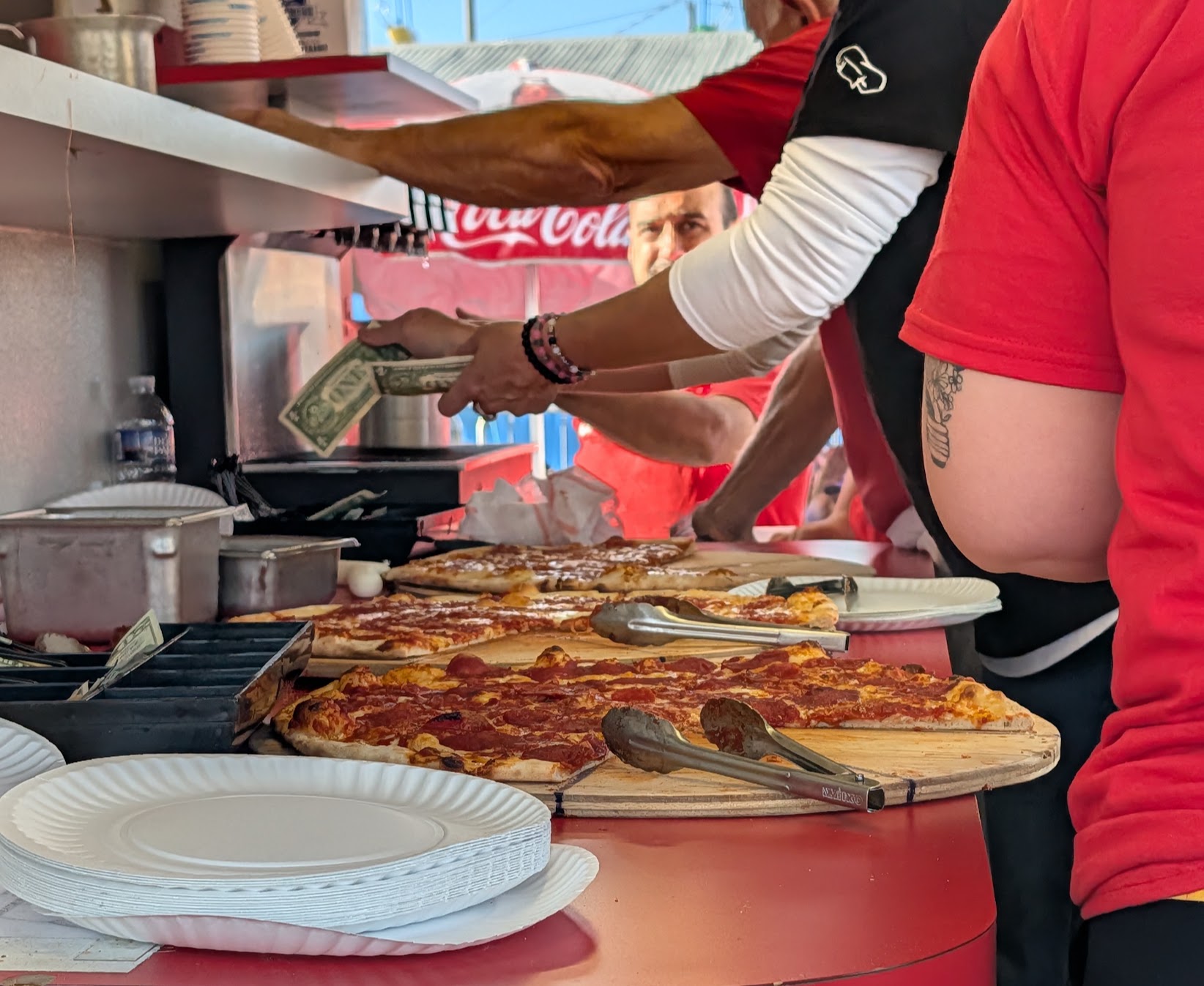
    Cash changes hands at the Grotto Pizza stand on opening day. Grotto has grown into a regional brand with restaurants well beyond Bloomsburg, but the fair stand still draws a line on day one and that line will be constant for the next eight days. Photo by Skip Hidlay

    What a century of family food stands at the Bloomsburg Fair can teach brands about connecting with customers

    At 4 p.m. on a Friday, two hours after the gates opened for the annual Bloomsburg Fair’s preview day, the line at the Grotto Pizza stand was already 20 people deep.

    I was in it. I grew up in Bloomsburg, a town in the rolling hills of northeastern Pennsylvania, where the last full week of September belongs less to the town than to the fair. The public schools close for the entire week, because so many families, and their kids, are working at the fair. Some run their own stands. Others pick up extra cash working someone else’s.

    Welcome to the sights and sounds and smells of the 171st Bloomsburg Fair. It began in 1855 as a showcase for the fruits and grains of Columbia County farmers. Today more than 500,000 people pass through the gates over nine days, making it the largest fair in Pennsylvania.

    Walking the grounds this year, I was struck less by what had changed than by what hadn’t. The same families run the same stands under the same signs, some so weathered they seem held together by paint and memory. Long before “food truck” and “pop-up” became part of American culture, Bloomsburg had its own version: a temporary city of family businesses that appears every September and is gone overnight a week later.

    Many of these are family-built brands that exist nine days a year. And I’ve come to believe they understand building customer loyalty better than many companies operating 365 days a year.

    Stand out, or get walked past

    Look at it from the stand owner’s side. Half a million people. Hundreds of stands. A few seconds of attention as each fairgoer drifts past. No ad budget, no agency, no algorithm. Just a sign, and whatever you can put on it that makes a hungry stranger stop.

    The answers are gloriously unpolished.

    The Hock's food stand at the Bloomsburg Fair features a homemade wooden sign on its roof with a strawberry Danish waffle topped with whipped cream beside a corn dog the size of a canoe.
    Hock’s doesn’t just describe its strawberry Danish waffles. It builds one, whipped cream and all, and mounts it on the roof beside a corn dog the size of a canoe. Photo by Skip Hidlay
    The Bissinger's stand at the Bloomsburg Fair peddles homemade apple and peach dumplings topped with cinnamon ice cream.
    Bissinger’s promises “Old Fashion” apple and peach “Dumplins’” with cinnamon ice cream, “Home Maid.” No copy editor approved their sign. Everyone remembers it. Photo by Skip Hidlay
    The Truly Tasty donut stand at the Bloomsburg Fair come in two kinds: plain or fancy. The brown, hand-lettered sign advertising the stand is worn, with peeling paint, but the donuts remain an enduring favorite of fairgoers.
    Plain or fancy, these donuts come with a brand a promise painted right on the ring: “Truly Tasty!” The paint is peeling. The promise isn’t. Photo by Skip Hidlay
    The Top of the Beef sandwich stand hand-lettered its name in yellow on a black top hat and hoisted it high enough to see from across the grounds of the Bloomsburg Fair.
    No logo, no tagline, no font debate. Top of the Beef hand-lettered its name in yellow on a black top hat and hoisted it high enough to see from across the fairgrounds. Photo by Skip Hidlay
    The Starr's Cider stand puts its hometown of Millville, Pennsylvania, right on its sign. In a crowd of strangers, "local" becomes its own brand differentiator.
    Starr’s Cider puts its hometown, Millville, right on the sign. In a crowd of strangers, “local” becomes its own differentiator. Photo by Skip Hidlay
    The Red Garter Saloon, a compact stand on wheels, sells birch beer, sarsaparilla and cream sodas from the Catawissa Bottling Co., from nearby Catawissa, Pa., plus an entire Old West persona, down to the wooden soda fountain barrels and the "Fast Draw" billing.
    The Red Garter Saloon sells birch beer, sarsaparilla and cream sodas from the Catawissa Bottling Co., from nearby Catawissa, Pa., plus an entire Old West persona, down to the wooden soda fountain barrels and the “Fast Draw” billing. Photo by Skip Hidlay
    The Karschner's food stand lets its menu do the talking at the Bloomsburg Fair: a prime rib sandwich for the main course and chocolate-covered peanut butter pie on a stick for dessert.
    Karschner’s lets its menu do the talking: a prime rib sandwich for the main course and chocolate-covered peanut butter pie on a stick for dessert. Photo by Skip Hidlay
    Every fair needs its novelty act. This year's lineup at the 171st Bloomsburg Fair includes deep-fried Pop-Tarts, with its sign lettered like a 1970s album cover.
    Every fair needs its novelty act. This year’s lineup includes deep-fried Pop-Tarts, lettered like a 1970s album cover. Photo by Skip Hidlay
    And then there's the Gunzey's stand, which sells hamburgers, cheeseburgers and sausage sandwiches. It turned a shipping container into a two-story stand with a rooftop deck and red umbrellas. Same fair, very different answer to the same question: How do you get noticed?
    And then there’s Gunzey’s, which turned a shipping container into a two-story stand with a rooftop deck and red umbrellas. Same fair, very different answer to the same question: How do you get noticed? Photo by Skip Hidlay

    What unites these signs isn’t design. It’s conviction. Each one tells you exactly what you’ll get and who is making it. In a crowd of half a million, authenticity isn’t a style. It’s a strategy.

    Earn it once a year

    Standing out wins you one sale. Loyalty is harder when your customers see you nine days a year and spend the other 51 weeks without you.

    The fair’s longtime stands earn it through ritual. Mine is vinegar on French fries, right out of the fryer. As a kid, I discovered that the Bowman’s and Gross’s French fry stands set out spray bottles of apple cider vinegar alongside the ketchup, and I’ve loved vinegar-doused fries ever since. It’s a tiny detail. Decades later, it’s still the reason I go looking for those stands.

    Bowman's French Fries, from nearby Espy, has been a fair institution for 78 years: hand-lettered sign, cash only. Look for the spray bottles of apple cider vinegar.
    Bowman’s French Fries, from nearby Espy, has been a fair institution for 78 years: hand-lettered sign, cash only. Look for the spray bottles of apple cider vinegar. Photo by Skip Hidlay

    Every Bloomsburg native carries a list of stands like mine that are must hits as you walk the fairgrounds. Fresh apple cider from Starr’s or the Benton Cider Mill. A warm dumpling under a scoop of ice cream. Kohr’s fresh-squeezed orangeade. Hewlett’s sausage and peppers. None of those memories is about a logo. Each is about a moment: a taste, a smell, a spritz of vinegar, a familiar face behind the counter.

    The Benton Cider Mill has a hand-lettered sign overhead and advertises its prices on green poster board below. The stand’s cider, fresh-pressed on site with a 1960s-era apple press, has been a fair staple since 1974. A young fairgoer in a purple dress, riding high on someone's shoulders, may be starting a list of her own Bloomsburg Fair favorites.
    Benton Cider Mill: a hand-lettered sign overhead, prices on green poster board below. The stand’s cider, fresh-pressed on site with a 1960s era apple press, has been a fair staple since 1974. The young fairgoer in the purple dress, riding high on someone’s shoulders, may be starting a list of her own Bloomsburg Fair favorites. Photo by Skip Hidlay

    A brand is the sum of every experience a person has with it. When you get only nine days a year, every one of those experiences must count.

    Hand it down

    Nowhere is that clearer than at Moyer’s Bar-B-Q.

    The Moyer's Bar-B-Q stand was started in 1923 by the Moyer family. The stand's banner promises "Fresh – Local – Homemade." A century of customers has held the family to that brand standard.
    Moyer’s Bar-B-Q, “Est. 1923.” The banner promises “Fresh – Local – Homemade.” A century of customers has held the family to that brand standard. Photo by Skip Hidlay

    “This is our 103rd year,” Wendy Keyser told me from behind the register. The stand comes from her mother’s side of the family, which started it in 1923.

    Wendy Keyser sits behind the cash register of the Moyer's Bar-B-Q stand her mother's family started 103 years ago at the Bloomsburg Fair.
    Wendy Keyser at the register of the stand her mother’s family started 103 years ago. Photo by Skip Hidlay

    Her son joined the business 20 years ago and now smokes all of the meats. The family still makes its own relish and barbecue sauce. “Everything’s homemade and we use local-sourced wood,” she says. When Moyer’s started, a sandwich cost 10 cents. Today it’s $10.

    A pulled pork sandwich on a soft roll, heaped with Moyer's homemade relish. Some brand promises you read. This one you eat.
    Pulled pork on a soft roll, heaped with Moyer’s homemade relish. Some brand promises you read. This one you eat. Photo by Skip Hidlay

    What Moyer’s doesn’t have is a restaurant. For more than a century, the brand has lived almost entirely inside those nine days. “It’s pretty much just the fair,” she said.

    That’s the part of the Bloomsburg story I keep coming back to. The fair lets a family business become a multigenerational brand without ever becoming a big one. And the school week off isn’t just a vacation. It’s an apprenticeship. Kids learn the counter, the fryer and the regulars. Some of them grow up to run the stand.

    Preserve the core, take it on the road

    In their book Built to Last, Jim Collins and Jerry Porras found that enduring companies master a paradox: They hold fast to a core ideology while relentlessly pushing for progress. Preserve the core, stimulate progress.

    The Bloomsburg Fair’s longest-running stands are a small, delicious proof of that idea. Moyer’s now has a food truck, taking a 103-year-old pop-up on the road. The relish, the smoke and the family behind the counter stay the same. What changes is how many days a year people can find them.

    For leaders whose brands operate 365 days, the fair offers three questions worth asking:

    1. If your customers saw you only nine days a year, would they recognize you in a crowd?
    2. Would they line up on day one, without the ads and the reminders?
    3. Is your brand something your people would want to hand down?

    I left the fairgrounds after a two-hour walkabout Friday, Sept. 23, with two Grotto pizza pies and a head full of old signs.

    The fair ends this Saturday, Oct. 3, at 9 pm. The small city of big-top tents, food stands, carnival rides and games of chance will disappear overnight, as if it were all just a magical dream.

    Next September, the families will be back, the signs will go back up and the line will start forming the minute the gates open.

    That isn’t nostalgia. It’s a brand promise, kept one year at a time.

  • Redesigning Seats on the Bus

    Redesigning Seats on the Bus

    Published in 2001, Jim Collins’ book Good to Great debunked key assumptions about how businesses become great and produce sustained excellent results. Collins and his research team found that factors like large acquisitions, revolutionary technology, and high executive compensation were accelerators, but not the root causes of greatness. Photo by Skip Hidlay

    Making the Leap from Good to Great

    There’s one book I’ve read and reread several times in three decades of leadership. Though it was published 25 years ago, it’s the first one I recommend when people ask me for business books they should read.

    For me, Good to Great has been a how-to guide on leading team transformations.

    Author Jim Collins and his research team spent five years comparing 1,435 companies to identify 11 worth studying to learn why — and how — some companies make the leap from good to great while others don’t.

    Collins introduced leadership transformation concepts in Good to Great that became timeless in the lexicon of business because he wove them into stories:

    The right people on the bus. The flywheel phenomenon. The hedgehog concept. The BHAG — the big hairy audacious goal. Level 5 leadership.

    “We expected that good-to-great leaders would begin by setting a new vision and strategy,” Collins wrote. “We found instead that they first got the right people on the bus, the wrong people off the bus, and the right people in the right seats — and then they figured out where to drive it.”

    Honoring Jim Collins’ work

    I want to both honor Collins’ work and share how I’ve applied his “first who, then what” framework in my practice to focus on redesigning the seats on the bus and identifying the best existing team members for these new seats.

    When I became The Ohio State University’s first enterprise Chief Communications and Marketing Officer for healthcare, I faced a daunting challenge: integrating three separate teams into one new department — a challenge made more complex because we were working remotely in the midst of the COVID pandemic.

    When taking over as a new leader, I have found an important initial step is to meet individually with each team member — no matter how long it takes or how busy you become.

    In these conversations, I ask each team member to share their personal career story, talk about the type of work that makes their soul sing — what they love to do — and provide their ideas for how to make our team better.

    Reading people rather than resumes

    This is the leadership discipline of human archaeology:

    As business conditions and strategic priorities change, talented team members are often filling roles that were designed for a previous version of the work, jobs that aren’t the best fit for their talent and that no longer advance the organization’s strategy.

    Human archaeology involves listening to learn, excavating team members’ experience, talent, and passion — and then matching their skills to new seats on the bus needed to advance enterprise goals.

    It requires reading people rather than resumes. And the courage to redesign the org chart around what you find.

    In my early days at Ohio State, one of the most revealing conversations I had was with Holly Roby. At the time, Holly was serving in an important role as marketing manager for Heart and Vascular services.

    When we talked, I learned she had previously served as creative director for a marketing agency, had a degree in journalism, and loved the creative process. As we began working together on projects, I also quickly learned that she was one of our best writers and editors.

    Crafting a new organizational design

    When I unveiled the new organizational design for the integrated Marketing, Communications and Digital Strategy Department, Holly held a leadership role in brand storytelling that previously didn’t exist — a new seat on the bus that would be critical to our future success.

    Since Holly had not worked previously in a traditional communications role, I received a healthy dose of skepticism from the team’s writers and editors, many of them seasoned journalists.

    A marketer? What does a marketer know about communications and storytelling?

    Give her a chance, I said, and you’ll see.

    Over the next five years, Holly became the linchpin in building the best multimedia brand storytelling team I’ve ever worked with in my career.

    She served as the editor of Ohio State Health & Discovery, bringing to life the new website we created to achieve the strategic imperative of building Ohio State’s brand as a destination for innovative clinical care and breakthrough scientific discovery.

    When I announced my plans to retire from Ohio State and start my own brand strategy practice, Holly shared how our work together changed her life.

    “I wanted to reach out to personally thank you for the lasting impact you’ve made on my career, my profession and me, personally,” she wrote. “You took a chance on me five years ago — putting me in a new position, giving me a team, and a whole new platform to develop.

    “I am so grateful that you saw something in me and gave me the confidence to rise to the challenge. Thank you for having faith in me and seeing potential in me that I didn’t see in myself.”

  • People Own What They Help Create

    People Own What They Help Create

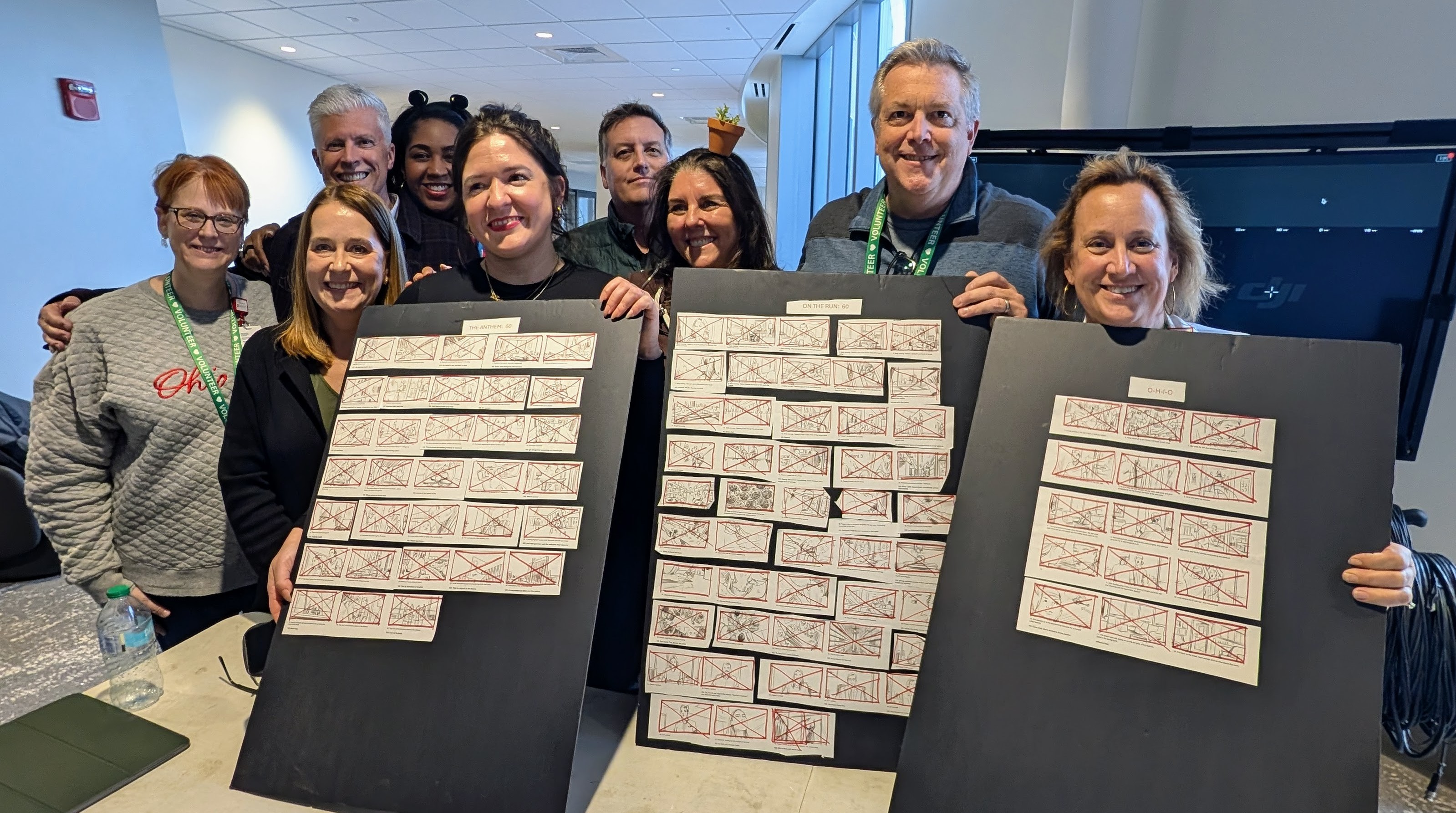
    Our team from The Ohio State University health system celebrates finishing a seven-day brand marketing shoot with colleagues from The Shipyard agency. We’d spent months collaborating with The Shipyard on new brand creative and filmed more than 90 individual scenes for multiple TV spots to launch the campaign. Photo by Skip Hidlay.

    A Playbook for Building Team Culture

    During a wide-ranging pitch for our business, a marketing agency strategist riffed on the power of genuine collaboration between team members to drive the iterative process of developing new brand campaigns.

    “People own what they help create,” said Mandi Cohen, head of strategy for The Shipyard.

    I nodded and smiled. I immediately wrote her quote on a scrap of paper so I would remember it exactly. She had distilled my experience to six simple words.

    Over three decades in leadership roles, I have learned that creating ownership is an essential ingredient in building high-performing teams.

    How you begin when taking over a new team sends a critical first signal about your views on ownership, what you value and how you will behave.

    Why Do Most Value Statements Fail?

    An important early step in creating ownership as a core pillar in your new team’s culture is the difficult, time-consuming and often-messy work of developing shared values.

    We’ve all heard the phrase “values-driven leadership” so often it’s become a corporate cliché. Many groan and roll their eyes when they hear this phrase.

    That’s because many leaders and organizations give lip service to values. They write them down, publish them on their websites, and then ignore them in how they behave and make decisions.

    Edgar Schein, who shaped the field of organizational culture, distinguished espoused values — what we say we believe — from underlying assumptions — what the culture actually rewards and punishes.

    If you’re not prepared to live by and uphold the values you develop, you will erode trust in your leadership and quickly lose credibility with your new team.

    How Do You Create Shared Values That Stick?

    I’ve helped communications and marketing teams develop shared values at three different health systems — two complex academic medical centers and a faith-based system that’s now part of Ascension.

    Each time, our team grew closer from the experience. Not because we discovered a magical combination of words to capture our values on paper. But because we took the time to follow an inclusive, collaborative process.

    Together.

    People own what they help create.

    When values are handed down from above — laminated, distributed, announced — they quickly fade into the background. When values are built by the people who are asked to live by them, something different happens.

    When I became the first enterprise-wide Chief Communications and Marketing Officer for The Ohio State University health system in November 2020, my charge — and challenge — was to integrate three separate and distinct teams with different cultures and practices into one unified department.

    As a first step in bringing the teams together, I knew instinctively that developing shared values would be critical — and that the process of doing it openly with broad-based input from team members would be as important as the final words.

    I enlisted the help of three staff members widely regarded as among the best writers and editors — one from each of the three teams. I gave them full rein to develop an initial draft, lead department-wide collaboration sessions, and create the final values we would commit to.

    They went off and worked for weeks. They argued over wording. They rejected the easy abstractions. They insisted on the specifics that mattered to them. They led meetings with other team members to get their input and feedback.

    They refined. They rewrote. They polished.

    When we unveiled the final wording, I committed publicly to live by our new shared values. I encouraged the department to hold me accountable.

    The values gradually became ingrained into our team’s culture and grew stronger with each year. They truly became our North Star.

    They stuck, I believe, because we took the time to debate, to disagree, and to listen to each other.

    This deliberative process created shared ownership of our new values.

    Values Are Behaviors, Not Abstractions

    Distilled to their essence, the shared values we developed at Ohio State were similar at each of the teams I have led in healthcare and the news media:

    • Maintaining a positive attitude.
    • Building ownership through teamwork and collaboration.
    • Committing to excellence through continuous improvement.
    • Assuming positive intent and extending grace when mistakes happen.

    Notice what these values are not. They are not abstract nouns dressed up to look strategic. They are behaviors.

    Assuming positive intent is something we can do or fail to do, in real time, on a Tuesday afternoon when a colleague’s email lands the wrong way. Extending grace is the choice we make when a teammate has gotten something wrong.

    A fair question: if our teams all built strong cultures, was it really the values exercise that did the work — or were we, as leaders, modeling the behavior all along, and our teams converged on values that matched our leadership styles?

    The honest answer is most likely both.

    A leader’s behavior fertilizes the soil. The team’s shared values grow — and a new culture begins to take shape — from the collaborative process.

    People own what they help create.

  • How are strong brands built?

    How are strong brands built?

    William “Skip” Hidlay, in his early years as a reporter, interviewing workers at the scene of a labor dispute.

    Lessons from a storytelling career

    The managing editor worked in an office with a glass wall facing the newsroom, presumably so he could keep an eye on the reporters. He seemed to have built-in radar for me – or at least for whenever I’d file a story.

    He’d see me drop off the paper slip with my story file name at the city desk. As I walked back to my desk, he’d come out of his office, snatch my story slip and retreat to his computer to review my work.

    I was in the third year of what would become a 30-year journalism career, taking me from reporter to news editor to executive editor for some of the biggest media brands – Knight-Ridder, The Associated Press, and Gannett.

    But at this moment, I worried only about managing editor Tom English Jr. – and the grueling interrogation he’d put me through whenever I turned in a story.

    Guardian of the Brand

    Tom grilled me about each word, each sentence, each paragraph. He wanted answers to questions I’d forgotten to ask. He asked about angles I’d not thought of. Most of all, he questioned me relentlessly to make sure I had my facts straight and that my story was accurate and fair.

    I didn’t realize it at the time, but this was my first lesson in building and protecting a brand. In this case, the brand was The Fayetteville Times, a small, scrappy morning daily newspaper in a medium-sized city in North Carolina.

    As managing editor, Tom served as the guardian of the brand, ensuring that every story we published was accurate, fair, balanced and thoroughly reported.  

    In doing so, he was helping us build and protect our own personal brands as journalists.

    News Media, Healthcare Share Key Brand Ingredient

    After three decades in the news media, as the traditional business model began to crumble, I shifted my career into healthcare marketing, communications and digital strategy.

    Over the next 15 years, I plunged into the world of brand strategy, omnichannel marketing campaigns and owned media storytelling.

    While news companies and academic medical centers couldn’t be more different, their brands share one essential ingredient: Trust.

    Both are businesses built on trust, their brands shaped by what happens at the moment of contact between a person and the organization.

    These two very different businesses also illustrate one of the most important – and misunderstood – elements of brand strategy:

    Brand is not a logo, an identity system, or an architecture of sub-brands. Brand embodies and grows from every experience a person has with your organization, your team members, your leaders, your website, your social media channels.

    Every moment of contact is a brand experience:

    • It’s the valet parking cars as patients arrive.
    • It’s the way a nurse extends grace to a grieving family.
    • It’s the way the call center handles a complaint at 4:55 pm on a Friday.

    The strongest brands grow one customer interaction at a time.

    Unfortunately, many companies, healthcare systems and large enterprise organizations neglect the hard work of aligning team culture, behavior, and experience with their brand promise.

    That gap between a brand’s promise and its customers’ lived experience is where trust dies.

    Once lost, trust is the most difficult thing in business to rebuild.

    StoryPower Connects Teams and Brands

    I founded W. Clair Communications to help leaders build brands on a bedrock of trust — brands forged from the alchemy of culture, experience and authentic storytelling.

    This is what I call StoryPower: Connecting Passion to Purpose.

    It’s a way of thinking about how to connect what your team members care about with what your organization exists to do — and then embedding that connection in culture, storytelling, and customer experience.

    Brands that endure aren’t the loudest. Their people understand what they are part of and why it matters. That’s how brand trust is built.