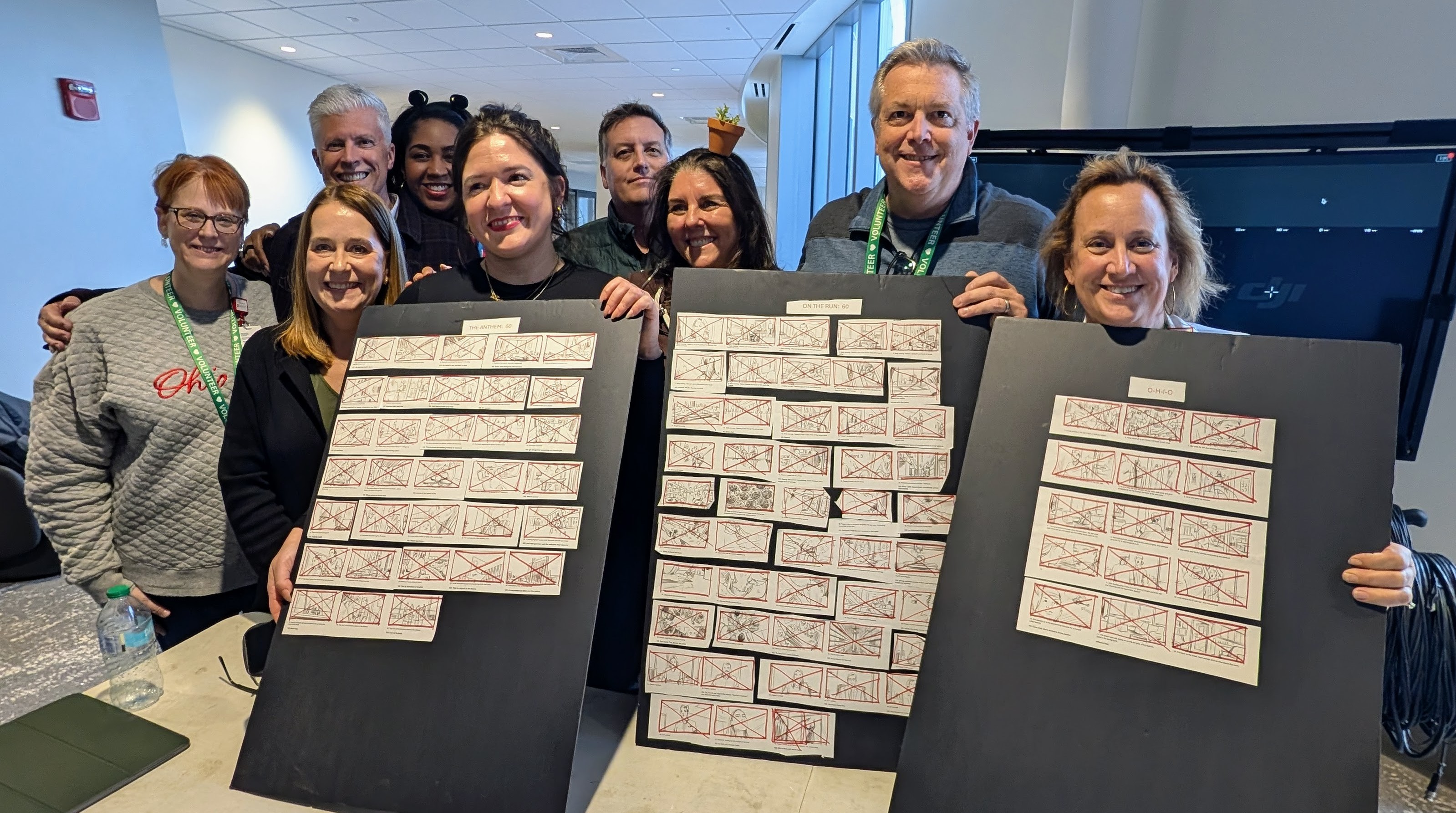
Published in 2001, Jim Collins’ book Good to Great debunked key assumptions about how businesses become great and produce sustained excellent results. Collins and his research team found that factors like large acquisitions, revolutionary technology, and high executive compensation were accelerators, but not the root causes of greatness. Photo by Skip Hidlay
Making the Leap from Good to Great
There’s one book I’ve read and reread several times in three decades of leadership. Though it was published 25 years ago, it’s the first one I recommend when people ask me for business books they should read.
For me, Good to Great has been a how-to guide on leading team transformations.
Author Jim Collins and his research team spent five years comparing 1,435 companies to identify 11 worth studying to learn why — and how — some companies make the leap from good to great while others don’t.
Collins introduced leadership transformation concepts in Good to Great that became timeless in the lexicon of business because he wove them into stories:
The right people on the bus. The flywheel phenomenon. The hedgehog concept. The BHAG — the big hairy audacious goal. Level 5 leadership.
“We expected that good-to-great leaders would begin by setting a new vision and strategy,” Collins wrote. “We found instead that they first got the right people on the bus, the wrong people off the bus, and the right people in the right seats — and then they figured out where to drive it.”
Honoring Jim Collins’ work
I want to both honor Collins’ work and share how I’ve applied his “first who, then what” framework in my practice to focus on redesigning the seats on the bus and identifying the best existing team members for these new seats.
When I became The Ohio State University’s first enterprise Chief Communications and Marketing Officer for healthcare, I faced a daunting challenge: integrating three separate teams into one new department — a challenge made more complex because we were working remotely in the midst of the COVID pandemic.
When taking over as a new leader, I have found an important initial step is to meet individually with each team member — no matter how long it takes or how busy you become.
In these conversations, I ask each team member to share their personal career story, talk about the type of work that makes their soul sing — what they love to do — and provide their ideas for how to make our team better.
Reading people rather than resumes
This is the leadership discipline of human archaeology:
As business conditions and strategic priorities change, talented team members are often filling roles that were designed for a previous version of the work, jobs that aren’t the best fit for their talent and that no longer advance the organization’s strategy.
Human archaeology involves listening to learn, excavating team members’ experience, talent, and passion — and then matching their skills to new seats on the bus needed to advance enterprise goals.
It requires reading people rather than resumes. And the courage to redesign the org chart around what you find.
In my early days at Ohio State, one of the most revealing conversations I had was with Holly Roby. At the time, Holly was serving in an important role as marketing manager for Heart and Vascular services.
When we talked, I learned she had previously served as creative director for a marketing agency, had a degree in journalism, and loved the creative process. As we began working together on projects, I also quickly learned that she was one of our best writers and editors.
Crafting a new organizational design
When I unveiled the new organizational design for the integrated Marketing, Communications and Digital Strategy Department, Holly held a leadership role in brand storytelling that previously didn’t exist — a new seat on the bus that would be critical to our future success.
Since Holly had not worked previously in a traditional communications role, I received a healthy dose of skepticism from the team’s writers and editors, many of them seasoned journalists.
A marketer? What does a marketer know about communications and storytelling?
Give her a chance, I said, and you’ll see.
Over the next five years, Holly became the linchpin in building the best multimedia brand storytelling team I’ve ever worked with in my career.
She served as the editor of Ohio State Health & Discovery, bringing to life the new website we created to achieve the strategic imperative of building Ohio State’s brand as a destination for innovative clinical care and breakthrough scientific discovery.
When I announced my plans to retire from Ohio State and start my own brand strategy practice, Holly shared how our work together changed her life.
“I wanted to reach out to personally thank you for the lasting impact you’ve made on my career, my profession and me, personally,” she wrote. “You took a chance on me five years ago — putting me in a new position, giving me a team, and a whole new platform to develop.
“I am so grateful that you saw something in me and gave me the confidence to rise to the challenge. Thank you for having faith in me and seeing potential in me that I didn’t see in myself.”